Wine & Food
The complete guide to pairing wine with food. Cheese boards built properly. Recipes matched to bottles. The best wine for every time of day. What to do, what never to do, and what nobody tells you about serving wine correctly.
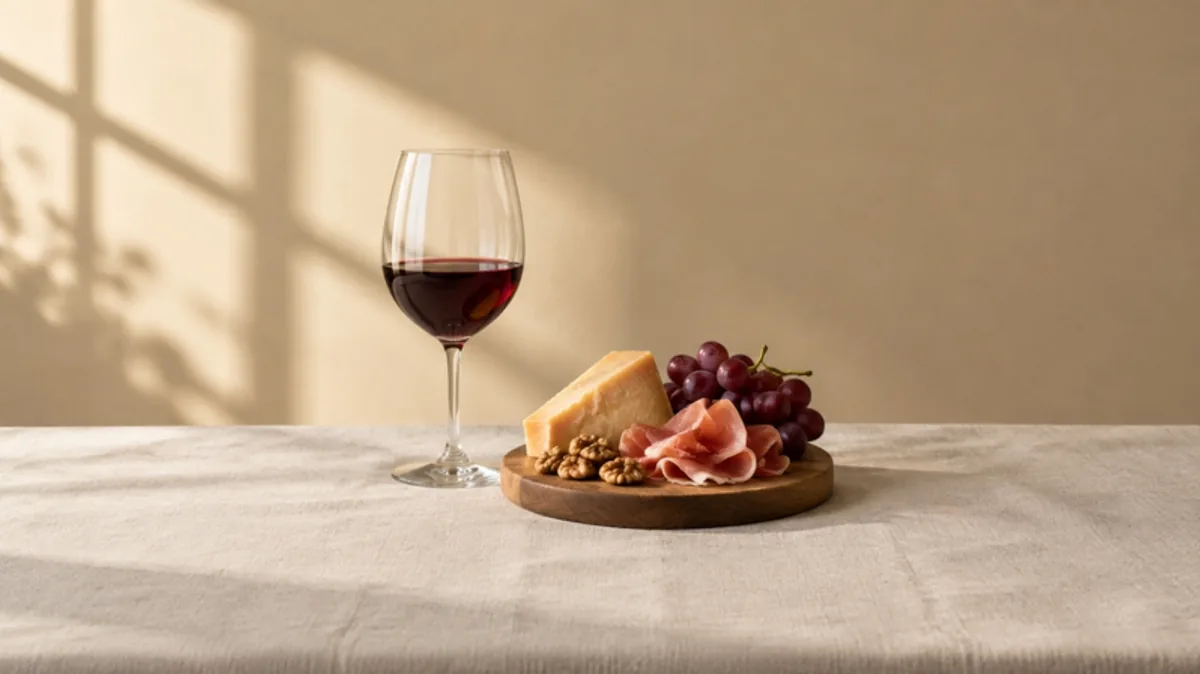
Wine & Food — The Core Pairings
The basic rule: match the weight of the wine to the weight of the food. Light wine with light food. Bold wine with bold food. Everything else flows from there.
- Roast chicken or duck
- Salmon and tuna (yes, really)
- Mushroom risotto
- Charcuterie and cured meats
- Soft cheeses — Brie, Camembert
- Earthy dishes with lentils or beets
- Pasta with tomato-based sauces
- Roast pork and lamb
- Pizza — especially with cured meats
- Semi-hard cheeses — Manchego, Pecorino
- Grilled vegetables
- Beef stew and braised dishes
- Ribeye and sirloin steak
- Lamb rack with herbs
- Venison and game meats
- Hard aged cheeses — Parmesan, aged Cheddar
- Dark chocolate desserts
- Slow-cooked beef short ribs
- Oysters and shellfish
- Grilled white fish
- Simple salads with lemon dressing
- Light seafood pasta
- Fresh goat cheese
- Sushi and sashimi
- Thai and Vietnamese cuisine
- Indian curry — especially with Riesling
- Goat cheese salad
- Asparagus and green vegetables
- Mexican cuisine — especially fish tacos
- Chinese dim sum
- Lobster and crab
- Creamy pasta — carbonara, alfredo
- Roast chicken with butter sauce
- Scallops with cream
- Soft washed rind cheeses
- Roasted pork with apple
- Oysters and caviar
- Fried food — yes, seriously
- Light canapés and finger food
- Smoked salmon blinis
- Fresh berries
- Celebration of any kind
- Grilled fish and seafood
- Nicoise salad
- Grilled vegetables
- Light summer pasta
- Ratatouille
- Mediterranean mezze
- Foie gras — the classic Sauternes pairing
- Fruit tarts and pastries
- Blue cheese — Stilton especially
- Crème brûlée
- Peach and apricot desserts
- Light sponge cakes
- Stilton — the legendary combination
- Dark chocolate 70%+
- Walnuts and dried figs
- Christmas pudding
- Pecan and walnut tart
- Slow-cooked beef with rich sauce
Wine & Cheese — Done Properly
The rule everyone gets wrong: white wine and Champagne pair better with most cheeses than red wine. Red wine's tannins clash with the fat and protein in cheese. Here are four boards that actually work.
"Wine is one of the most civilized things in the world."— Ernest Hemingway
The Right Wine for Every Moment
There's no strict rule — but there is a logic. The time of day, occasion and food all point towards certain wines. Here's how to think about it.
If you're drinking before noon, keep it light and celebratory. Brunch, special occasions, or a long lazy weekend morning.
Lighter wines that don't slow you down. Fresh, crisp and food-friendly. You still have a day ahead of you.
The hour before dinner. Dry, appetite-stimulating and not too heavy. The Italians and Spanish get this right.
Match the wine to the meal. This is where bold reds, full whites and aged bottles come into their own.
Recipes Built Around a Bottle
These aren't complex restaurant dishes. These are proper recipes for real people — built around a specific wine pairing that makes both the food and the bottle better.
Six hours, one pan, minimal effort. The result is fall-off-the-bone lamb with deep, herby richness.
- 2kg bone-in lamb shoulder
- 8 garlic cloves, sliced
- 4 rosemary sprigs
- Olive oil, salt, pepper
- 250ml red wine (use the Shiraz)
- 500ml lamb or beef stock
- Stud lamb with garlic and rosemary
- Sear in hot pan until golden all over
- Add wine and stock to roasting pan
- Cover tightly, roast at 160°C for 6 hours
- Rest 30 minutes before pulling
Crisp pastry, creamy goat cheese, fresh herbs and a wine that makes every bite sing.
- 1 sheet shortcrust pastry
- 200g soft goat cheese
- 3 eggs + 150ml cream
- Handful fresh chives and tarragon
- Zest of 1 lemon
- Salt, white pepper
- Blind bake pastry case at 180°C — 15 min
- Whisk eggs, cream, herbs and lemon zest
- Crumble goat cheese into case
- Pour over custard and bake 25-30 min
- Serve warm with dressed leaves
Restaurant quality in 20 minutes. Sweet scallops, silky pea purée, a wine that makes the table go quiet.
- 6 large fresh scallops
- 300g frozen peas
- 50ml double cream
- 1 garlic clove, mint leaves
- Butter, lemon juice
- Salt, white pepper
- Blitz peas with cream, garlic and mint
- Season and keep warm
- Pat scallops dry — essential
- Sear in very hot butter 90 sec per side
- Plate on purée, finish with lemon
The kind of dish that needs four hours and tastes like it. Deep, rich and exactly why Italian wine exists.
- 1.2kg beef shin, cut into chunks
- 1 bottle red wine (Barbera or similar)
- 400g tinned tomatoes
- 250ml beef stock
- Onion, celery, carrot, garlic
- Bay, thyme, rosemary
- 500g fresh pappardelle
- Brown shin in batches until deeply coloured
- Soften vegetables in same pan
- Add wine and reduce by half
- Add tomatoes and stock, braise 3-4 hours
- Shred meat, toss with pasta
The most classic of all wine and food pairings. Rich against sweet. The combination that changed French cuisine.
- 400g duck foie gras terrine
- 4 thick slices brioche
- Fleur de sel
- Black pepper, freshly ground
- Optional: Sauternes jelly on the side
- Slice foie gras terrine at room temperature
- Toast brioche until golden
- Place foie gras on toast
- Finish with fleur de sel and pepper
- Serve immediately with cold Sauternes
The wine pairing nobody expects but everyone loves. Aromatic meets aromatic. Spice meets spice.
- 600g chicken thighs, sliced
- 3 tbsp green curry paste
- 400ml coconut milk
- Fish sauce, palm sugar, lime
- Thai basil, makrut lime leaves
- Jasmine rice to serve
- Fry curry paste in coconut cream 2 min
- Add chicken and cook through
- Add coconut milk and season
- Simmer 10 min, finish with lime
- Serve over jasmine rice
Temperature & Glassware
Serving wine at the wrong temperature is the single most common mistake. Too cold kills the aromas. Too warm makes the alcohol dominant. These are the correct temperatures.
Tulip-shaped flute or a wider Champagne coupe for prestige cuvées. Always cold. The bubbles carry the aromas — a wider glass allows more expression but loses fizz faster.
Standard white wine glass — not too large. Sauvignon Blanc, Pinot Grigio, Riesling. Colder preserves the freshness. Remove from fridge 15 minutes before serving.
Larger white wine glass — Burgundy shape for Chardonnay. Slightly warmer allows the oak and fruit complexity to open. Too cold and you lose half the wine.
Standard white wine glass. Light rosé on the colder side; fuller rosé slightly warmer. Always chilled — room temperature rosé is one of the saddest things in wine.
Medium Burgundy-style glass. Pinot Noir, Gamay, Barbera. Slightly chilled — 20 minutes in the fridge from room temperature. The French actually serve Beaujolais quite cold.
Large Bordeaux glass for Cabernet and Syrah. Slightly cooler than room temperature in summer — 18°C is the upper limit. Above this, alcohol dominates and the wine tastes flat.
Do's & Don'ts
Most wine rules are nonsense invented by snobs. These ones are real — practical, based on chemistry and decades of experience.
Chill red wine slightly in summer. The ideal temperature for bold reds is 16-18°C. In a warm room that means a brief spell in the fridge. Warm red wine is unpleasant — the alcohol dominates and the fruit disappears.
Let young wine breathe. Young, tannic reds benefit enormously from 30-60 minutes in a decanter or simply being poured into a jug. It softens the tannins and opens the fruit. It takes no effort and makes a real difference.
Buy a proper wine glass. You don't need twenty types. One large, thin-rimmed glass with a tapered top works for almost everything. The difference between a proper glass and a thick tumbler is not snobbery — it's physics.
Take wine out of the fridge 15 minutes before serving. White wine served straight from the fridge is too cold. The aromas are suppressed. Give it a few minutes and the wine opens up entirely.
Pair wine with where it's from. Italian wine with Italian food. Spanish wine with Spanish food. French wine with French food. The cuisine and wine of a region evolved together over centuries — they fit instinctively.
Drink the wine you enjoy. If you love it, it's right. No wine expert can tell you that your palate is wrong. Wine is pleasure — not a test you can fail.
Don't serve white wine straight from the fridge. 4°C is too cold. The aromas shut down completely. Let it warm up slightly — 8-10°C for light whites, 10-13°C for fuller styles. You've opened a good bottle; let it speak.
Don't pair artichoke or asparagus with most wine. Both contain compounds (cynarin and mercaptans) that make wine taste metallic and sweet. If you must pair, use a very dry, acidic white like Sauvignon Blanc or a dry Sherry.
Don't assume a famous name means better. A bottle's standing reflects demand, scarcity and reputation as much as quality. A Rioja Reserva from a good producer will often outdo a famous Bordeaux from an average one.
Don't pair tannic red wine with delicate fish. Some red wines taste metallic with oily fish — it's mostly iron in the wine reacting with the fish oils. Light Pinot Noir with salmon works. Cabernet with cod does not.
Don't leave open wine out on the side. Once opened, wine oxidises rapidly. Use a wine stopper and store the bottle upright in the fridge — even red wine — so less wine touches the air. Most wines are best consumed within 2-3 days of opening.
Don't be intimidated by wine lists. If you're unsure, ask the sommelier what they would drink. They'd rather help you choose well than watch you guess badly. That's what they're there for — use them.